
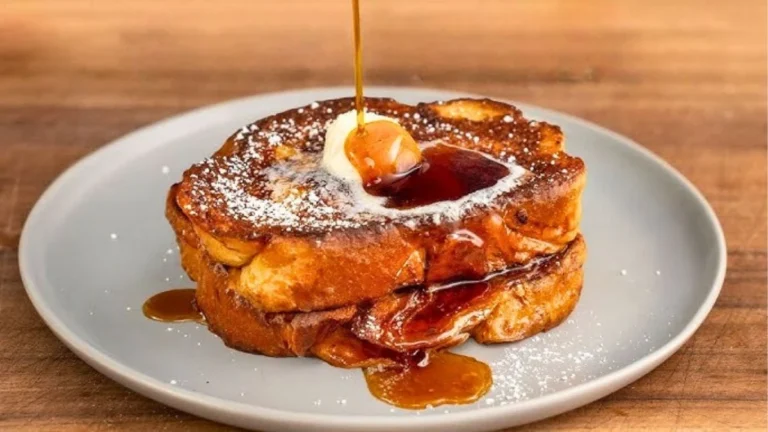

If you’ve ever wondered how professional chefs make French toast that’s impossibly creamy inside with a golden, buttery crust, Frank Proto’s French toast recipe is your answer.
This isn’t your average weekend breakfast-it’s a luxurious, restaurant-quality technique that transforms thick-cut challah into custard-soaked perfection.
The secret? A rich cream-based batter spiked with brandy and orange zest, combined with a slow, patient cooking method that ensures every bite is worth the wait.
Whether you’re planning a special brunch or just want to elevate your morning routine, this Frank Proto French toast delivers bakery-worthy results right from your home kitchen.
What Does Frank Proto French Toast Taste Like?
Frank Proto’s French toast is decadently rich and custardy, with a texture that’s almost pudding-like in the center while maintaining a crispy, caramelized exterior. The heavy cream creates an incredibly silky mouthfeel, while the brandy adds subtle warmth and complexity.

Orange zest provides bright, aromatic notes that cut through the richness, and freshly grated nutmeg delivers cozy spice undertones.
Each bite balances sweet and savory-the salted butter creates a perfect contrast to real maple syrup. It’s indulgent without being overly sweet, sophisticated yet comforting, and miles away from standard diner French toast.
Frank Proto French Toast Recipe Ingredients
For the Bread:
- 1 loaf challah bread (or sturdy bakery white loaf-avoid supermarket sandwich bread)
For the Custard Batter:
- 2 cups heavy cream (can substitute half-and-half or whole milk; avoid 2% or skim)
- 4 large eggs
- 2–3 tablespoons sugar (adjust to taste)
- 1 teaspoon vanilla extract
- 1–2 tablespoons brandy (optional but recommended)
- Zest of 1 orange
- ⅛–¼ teaspoon freshly grated nutmeg (or ground nutmeg)
- Pinch of kosher salt
For Cooking:
- Salted butter (generous amount-about 1–2 tablespoons per batch)
For Serving:
- Real maple syrup
- Powdered sugar
- Extra whipped salted butter
Essential Kitchen Utensils
- Sharp serrated knife
- Wire cooling rack or baking tray
- Wide, shallow bowl (for soaking bread)
- Immersion blender or whisk
- Non-stick skillet or cast-iron pan
- Spatula
- Measuring cups and spoons
- Microplane or zester (for orange zest and nutmeg)
Preparation and Cooking Time
| Timing | Duration |
|---|---|
| Prep Time | 10 minutes (plus overnight drying preferred) |
| Soaking Time | 20–30 minutes per batch |
| Cook Time | 10–12 minutes per batch |
| Total Time | ~1 hour active time |
| Servings | 4–6 people (6–8 thick slices) |
Step-by-Step Instructions for Frank Proto French Toast
Step 1: Prepare and Dry the Bread
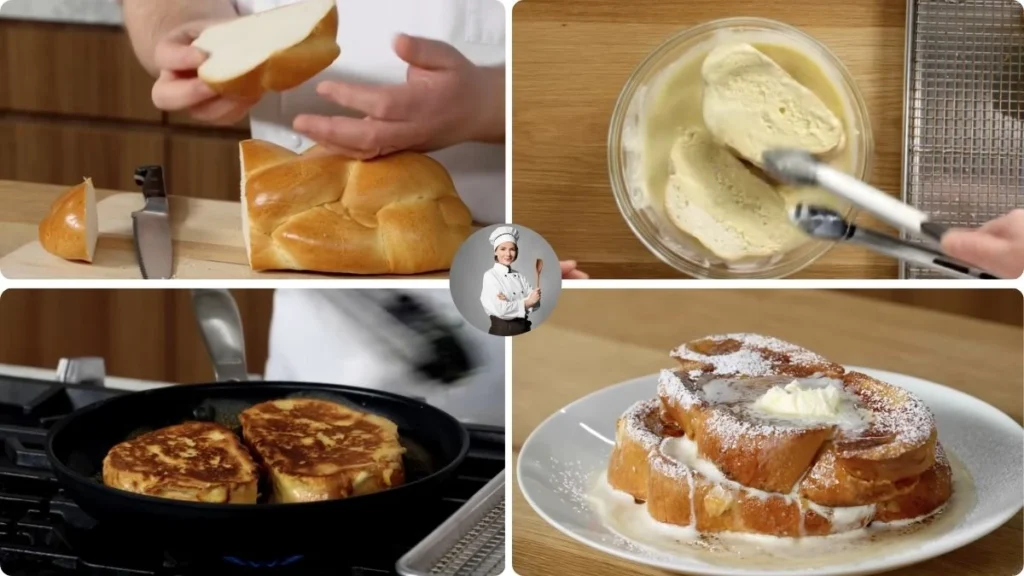
Slice your challah loaf into ¾ to 1-inch thick pieces-about “two fingers” wide. This thickness is crucial for achieving that signature custardy interior. Lay the slices on a wire rack or baking tray and let them dry out overnight at room temperature. This step allows the bread to absorb maximum custard without falling apart. If you’re short on time, place the slices in a 200–250°F oven for 15–20 minutes until lightly stale but not toasted.
Step 2: Create the Custard Mixture
In a wide, shallow bowl large enough for soaking bread, combine 2 cups heavy cream, 4 eggs, 2–3 tablespoons sugar, 1 teaspoon vanilla extract, 1–2 tablespoons brandy, orange zest, nutmeg, and a pinch of salt. Use an immersion blender or whisk vigorously until the mixture is completely smooth and homogeneous. Make sure there are no clumps of nutmeg or streaks of egg-the custard should be velvety and uniform in color.
Step 3: Soak the Bread Properly
Place 2–3 slices of dried challah into the custard (avoid overcrowding). Let them soak for 20–30 minutes, flipping occasionally to ensure even absorption. The bread is ready when it feels soft and spongy throughout. Test by gently squeezing-custard should ooze out like a saturated sponge, and the center should not feel firm or dry. This extended soaking time is what makes Frank Proto French toast exceptionally creamy.
Step 4: Cook Low and Slow
Heat your non-stick or cast-iron skillet over medium-low heat. Add 1–2 tablespoons of salted butter and let it melt slowly-it should not sizzle immediately. Gently lift each soaked slice from the custard, allowing excess to drip off (don’t squeeze hard). Place in the pan where the butter should form small, gentle bubbles around the edges. Cook for 4–5 minutes on the first side until golden brown, then flip and cook for 5–7 more minutes until the center is fully set. Press the center gently-no liquid should squeeze out, but it should still feel soft and yielding.
Step 5: Serve Immediately
Transfer the French toast to plates while piping hot. Top each slice with a pat of whipped salted butter, drizzle generously with real maple syrup, and dust with powdered sugar. Frank Proto French toast tastes best eaten immediately, straight from the pan when the exterior is at its crispiest and the interior is still steaming.
Delicious Customization and Pairing Ideas
1. Berry Compote Topping
Simmer fresh or frozen mixed berries with a splash of lemon juice and a tablespoon of sugar until they break down into a thick, jammy compote. The tartness of berries balances the rich custard beautifully and adds vibrant color to your plate.
2. Caramelized Banana Upgrade
Slice bananas lengthwise and caramelize them in butter and brown sugar until golden. The caramelized fruit adds natural sweetness and a luxurious texture that complements the creamy interior of Frank Proto French toast perfectly.
3. Savory Brunch Twist
Reduce the sugar in the custard to 1 tablespoon and omit the brandy. Serve your French toast alongside crispy bacon, sausage, or a fried egg. The orange zest and nutmeg still provide complexity while allowing savory elements to shine.
4. Citrus Variation
Replace orange zest with lemon or Meyer lemon zest for a brighter, more tart profile. You can also add a tablespoon of Grand Marnier instead of brandy for an orange liqueur boost that intensifies the citrus notes.
5. Spiced Cream Topping
Whip heavy cream with a touch of cinnamon, vanilla, and powdered sugar until soft peaks form. Dollop this spiced whipped cream on top instead of butter for an even more indulgent presentation.
6. Nutty Crunch Addition
Sprinkle toasted pecans, sliced almonds, or candied walnuts over your finished French toast. The textural contrast and nutty flavor add sophistication and make each bite more interesting.

7. Coffee Shop Pairing
Serve Frank Proto French toast alongside a strong espresso or cappuccino. The bitter coffee notes cut through the richness of the cream and butter, creating a balanced brunch experience. A mimosa or fresh-squeezed orange juice also pairs wonderfully, echoing the orange zest in the custard.
Expert Tips for Perfect French Toast Every Time
1. Choose the Right Bread
Challah is ideal because of its tight crumb structure and slightly sweet flavor, but a sturdy bakery white loaf works too. Avoid artisan breads with large, irregular holes-they won’t absorb custard evenly. The bread should have a dense, uniform texture that can hold up to prolonged soaking without disintegrating.
2. Don’t Skip the Drying Step
Fresh, soft bread becomes soggy and falls apart during soaking. Drying the bread overnight (or briefly in the oven) creates a sturdier structure that absorbs maximum custard while maintaining its shape. This step is non-negotiable for achieving restaurant-quality results.
3. Use Full-Fat Dairy
Heavy cream creates the signature luxurious texture of Frank Proto French toast. If you must substitute, use half-and-half or whole milk, but never skim or 2% milk-they lack the fat content needed for that custardy interior. The fat also helps create better browning and flavor development.
4. Temperature Control is Critical
Medium-low heat is essential. High heat will burn the exterior before the custard-soaked center cooks through, leaving you with a raw middle. The butter should melt slowly and bubble gently, not sizzle aggressively. Patience during cooking is what separates good French toast from extraordinary Frank Proto French toast.
5. Soak Long Enough
Twenty to thirty minutes isn’t a suggestion-it’s required for the bread to absorb enough custard to achieve that pudding-like interior. Set a timer and flip occasionally. When properly soaked, the bread should feel uniformly soft throughout with no firm spots remaining.
6. Fresh Nutmeg Makes a Difference
Pre-ground nutmeg loses its aromatic oils quickly. Freshly grated nutmeg from a whole seed provides a more vibrant, complex spice note that elevates the entire dish. A microplane grater makes this easy, and one whole nutmeg lasts for months.
7. Batch Cook Efficiently
Frank Proto French toast requires attention and can’t be rushed. If cooking for a crowd, keep finished slices warm in a 200°F oven on a wire rack while you finish subsequent batches. This prevents them from getting soggy while maintaining that crispy exterior. Alternatively, soak multiple slices simultaneously so they’re ready to cook in succession.
Storage and Reheating Guidance
Store leftover Frank Proto French toast in an airtight container in the refrigerator for up to 3 days. Reheat in a 350°F oven for 8–10 minutes or in a toaster oven until warmed through and the exterior crisps up again. Avoid microwaving, as it makes the texture soggy.
Common Questions About Frank Proto French Toast
Can I make Frank Proto French toast ahead of time?
Yes, with strategic planning. Dry your bread overnight and prepare the custard mixture in advance-it keeps refrigerated for 24 hours. However, soak and cook the French toast fresh for best results. The soaking process takes 20–30 minutes, so you can’t completely make it ahead, but these prep steps save significant time on the morning of serving.
What makes Frank Proto’s method different from regular French toast?
Frank Proto’s French toast recipe emphasizes three key differences: using thick-cut challah (¾–1 inch), an extended soaking time (20–30 minutes versus the typical 30 seconds), and low, slow cooking (medium-low heat for 10–12 minutes total). These techniques create a custard-like interior texture that’s fundamentally different from traditional French toast, which tends to be drier and more bread-forward.
Why use brandy in the custard mixture?
Brandy adds depth and subtle complexity to the custard without making it taste boozy-the alcohol cooks off during the process. It enhances the vanilla and orange flavors while providing a sophisticated warmth. If you prefer to skip alcohol, the Frank Proto French toast will still be delicious, though slightly less complex in flavor.
Can I substitute the heavy cream with a lighter dairy option?
You can use half-and-half or whole milk, but the texture won’t be as rich and custardy. Heavy cream’s high fat content is what creates that signature luxurious mouthfeel. Avoid 2% or skim milk entirely-they contain too much water and not enough fat, resulting in eggy, less creamy French toast that doesn’t achieve the desired consistency.
What type of challah works best for this recipe?
Look for day-old challah from a bakery with a tight, uniform crumb structure. Fresh, pillowy challah is actually too soft and will fall apart during the long soak. If you can only find fresh challah, the drying step becomes even more important. Avoid egg challah that’s extremely rich and soft-you want a slightly firmer texture.
How do I know when the French toast is fully cooked?
The exterior should be deeply golden brown, and when you press the center gently with your finger or spatula, no liquid custard should seep out. The interior should feel soft and yielding but set, not jiggly or wet. If liquid emerges when pressed, continue cooking on low heat-rushing with higher heat will burn the outside while leaving the center undercooked.
Can I freeze Frank Proto French toast?
Yes, though it’s best fresh. Let cooked French toast cool completely, then freeze in a single layer on a baking sheet. Once frozen, transfer to a freezer bag for up to 2 months. Reheat directly from frozen in a 350°F oven for 12–15 minutes. The texture won’t be quite as pristine as fresh, but it’s a convenient option for meal prep.
Why is my French toast soggy instead of crispy?
Soggy French toast usually results from cooking at too low a temperature (not enough to evaporate moisture and brown properly), using too much butter that pools rather than crisps, or not cooking long enough. Make sure your pan is properly preheated, the butter is bubbling gently, and you cook each side fully until golden brown before flipping.
What’s the best pan for making Frank Proto French toast?
A non-stick skillet is easiest for beginners and requires less butter, but a well-seasoned cast-iron pan provides superior heat retention and browning. Cast iron holds steady, even heat at low temperatures, which is ideal for the long cooking time. Whatever pan you choose, make sure it’s large enough to fit 2–3 slices without crowding.
Do I need to use salted or unsalted butter?
Frank Proto specifically recommends salted butter for cooking and serving. The salt enhances all the flavors in the dish and creates a pleasant sweet-savory balance when combined with maple syrup. If you only have unsalted butter, add an extra small pinch of salt to your custard mixture.
Frank Proto French Toast Recipe
Ingredients
- 1 loaf challah bread
- 2 cups heavy cream
- 4 large eggs
- 2 –3 tablespoons sugar
- 1 teaspoon vanilla extract
- 1 –2 tablespoons brandy
- Zest of 1 orange
- ⅛ –¼ teaspoon freshly grated nutmeg
- Pinch of kosher salt
- Salted butter
- Real maple syrup
- Powdered sugar
- Extra whipped salted butter
Instructions
- Slice your challah loaf into ¾ to 1-inch thick pieces-about “two fingers” wide. This thickness is crucial for achieving that signature custardy interior. Lay the slices on a wire rack or baking tray and let them dry out overnight at room temperature. This step allows the bread to absorb maximum custard without falling apart. If you’re short on time, place the slices in a 200–250°F oven for 15–20 minutes until lightly stale but not toasted.
- In a wide, shallow bowl large enough for soaking bread, combine 2 cups heavy cream, 4 eggs, 2–3 tablespoons sugar, 1 teaspoon vanilla extract, 1–2 tablespoons brandy, orange zest, nutmeg, and a pinch of salt. Use an immersion blender or whisk vigorously until the mixture is completely smooth and homogeneous. Make sure there are no clumps of nutmeg or streaks of egg-the custard should be velvety and uniform in color.
- Place 2–3 slices of dried challah into the custard (avoid overcrowding). Let them soak for 20–30 minutes, flipping occasionally to ensure even absorption. The bread is ready when it feels soft and spongy throughout. Test by gently squeezing-custard should ooze out like a saturated sponge, and the center should not feel firm or dry. This extended soaking time is what makes Frank Proto French toast exceptionally creamy.
- Heat your non-stick or cast-iron skillet over medium-low heat. Add 1–2 tablespoons of salted butter and let it melt slowly-it should not sizzle immediately. Gently lift each soaked slice from the custard, allowing excess to drip off (don’t squeeze hard). Place in the pan where the butter should form small, gentle bubbles around the edges. Cook for 4–5 minutes on the first side until golden brown, then flip and cook for 5–7 more minutes until the center is fully set. Press the center gently-no liquid should squeeze out, but it should still feel soft and yielding.
- Transfer the French toast to plates while piping hot. Top each slice with a pat of whipped salted butter, drizzle generously with real maple syrup, and dust with powdered sugar. Frank Proto French toast tastes best eaten immediately, straight from the pan when the exterior is at its crispiest and the interior is still steaming.
Notes
This Frank Proto French toast recipe proves that exceptional breakfast doesn’t require fancy equipment or obscure ingredients-just quality bread, patience, and proper technique.
The combination of thick-cut challah, a brandy-spiked custard enriched with heavy cream, and slow, careful cooking creates French toast that’s genuinely restaurant-quality.
Whether you’re treating yourself to a luxurious weekend brunch or impressing guests with your culinary skills, this method delivers consistent, spectacular results.
Once you experience that custardy interior and buttery golden crust, you’ll never go back to ordinary French toast again!
You can also follow us on Pinterest, and YouTube for more delicious updates and kitchen inspiration. Your feedback and support mean the world to us!