

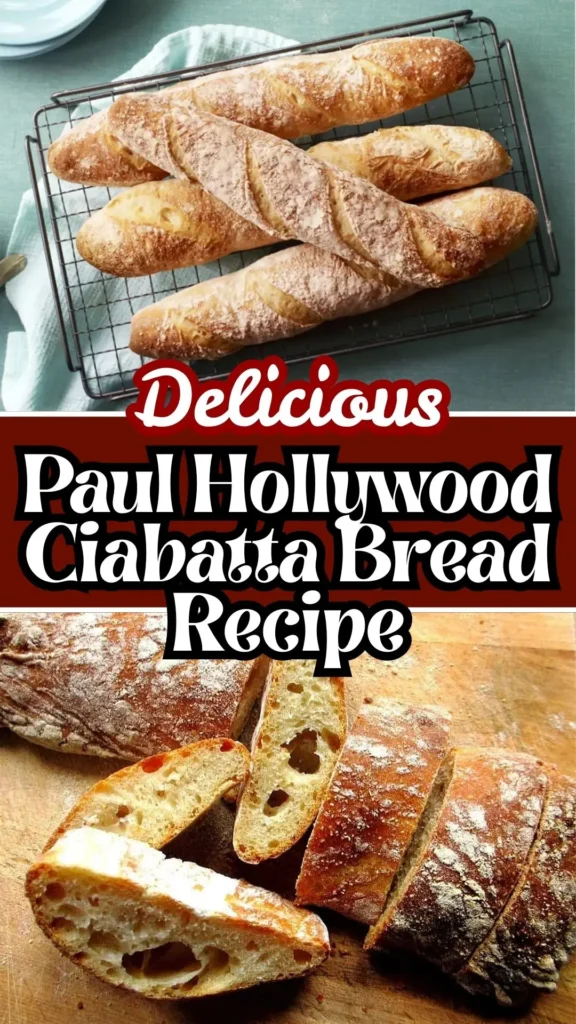
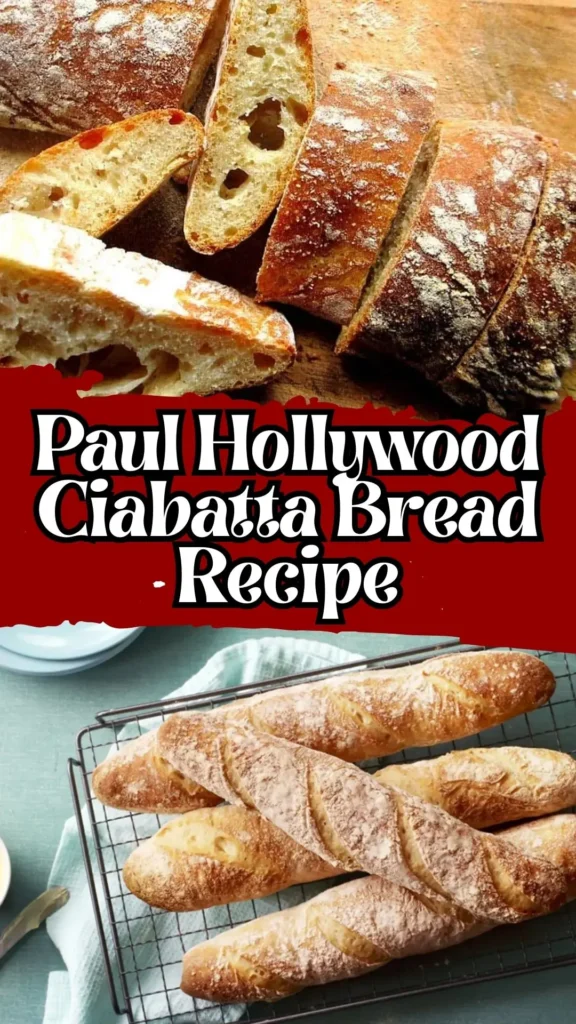
If you’ve been searching for the paul hollywood ciabatta bread recipe that delivers bakery-quality results at home, you’ve come to the right place.
This ciabatta bread recipe by paul hollywood has become legendary among home bakers for its incredibly airy crumb, crispy golden crust, and that signature rustic appearance.
Unlike dense homemade bread, this paul hollywood original ciabatta bread recipe produces those coveted large, irregular holes that make ciabatta perfect for soaking up olive oil, creating gourmet sandwiches, or serving alongside Italian dishes.
The technique may seem intimidating at first, but paul hollywood’s ciabatta bread recipe breaks down the process into manageable steps that even beginner bakers can master with practice and patience.
What Does It Taste Like?
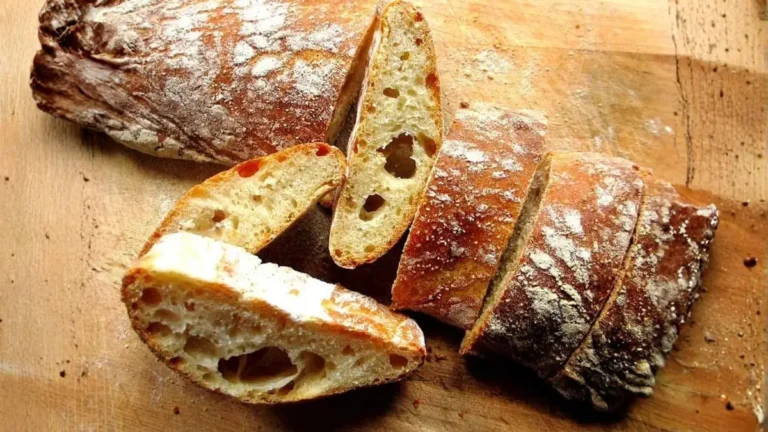
Paul Hollywood’s ciabatta bread offers a delightfully complex flavor profile that balances simplicity with sophistication. The crust delivers a satisfying crunch with a subtle nuttiness from the high-temperature baking, while the interior reveals an incredibly light, open crumb structure that’s tender and slightly chewy.
Each bite carries a mild wheat flavor with a hint of tanginess from the fermentation process, creating that authentic Italian bread taste. The texture is deliberately irregular-with large air pockets throughout-making it perfect for absorbing sauces, oils, and spreads.
When toasted, the crust becomes even more pronounced while the interior maintains its soft, airy character that melts in your mouth.
Paul Hollywood Ciabatta Bread Recipe Ingredients
Ingredients:
- 500g strong white bread flour, plus extra for dusting
- 10g salt
- 10g instant yeast
- 440ml cold water (330ml + 110ml added separately)
- Fine semolina, for dusting
- Olive oil, for greasing
Kitchen Utensils:
- Freestanding mixer with dough hook attachment
- 3-litre square plastic container with lid
- Two large baking trays
- Wire cooling rack
- Kitchen scale (for precise measurements)
- Measuring jug
- Dough scraper or sharp knife
Preparation and Cooking Time
Prep Time: 20 minutes
First Rise: 1½ to 1¾ hours
Second Rise: 30-45 minutes
Baking Time: 25 minutes
Total Time: Approximately 3 hours
Servings: 4 ciabatta loaves
Difficulty Level: Intermediate
Paul Hollywood Ciabatta Bread Recipe Instructions
Step 1: Combine the dry ingredients
Place 500g strong white bread flour into your freestanding mixer bowl fitted with the dough hook. Add 10g instant yeast to one side and 10g salt to the opposite side-never place salt directly on yeast as it can inhibit activation.
Step 2: Begin mixing with initial water
Pour 330ml cold water into the bowl and start mixing on slow speed. Allow the ingredients to begin coming together into a shaggy dough, which should take about 1-2 minutes.
Step 3: Add remaining water gradually
With the mixer still running on slow speed, drizzle in the remaining 110ml cold water very slowly, almost drop by drop. This gradual hydration is crucial for developing the proper dough consistency in this ciabatta bread recipe paul hollywood style.
Step 4: Develop the gluten structure
Increase the mixer speed to medium and continue kneading for 5-8 minutes. The dough should transform from sticky and rough to smooth, elastic, and stretchy. It will remain quite wet-this high hydration is essential for ciabatta’s characteristic open crumb.
Step 5: First prove in a square container
Lightly oil your 3-litre square plastic container. Transfer the wet dough into the container, seal with the lid, and leave at room temperature for 1½ to 1¾ hours. The dough should at least double, even treble in size. The square shape helps maintain structure during this crucial slow fermentation.
Step 6: Prepare for shaping
Generously dust two large baking trays with a mixture of flour and fine semolina. Then heavily flour and semolina your work surface-don’t be shy with this step as the dough is extremely wet.
Step 7: Turn out the dough gently
Carefully tip the proved dough onto your prepared surface, trying to maintain a rough square shape. Handle it very gently to preserve all those beautiful air bubbles you’ve developed-no knocking back required for this paul hollywood original ciabatta bread recipe.
Step 8: Divide and shape
Dust the top of your dough generously with more flour and semolina. Using a dough scraper or sharp knife, cut the dough lengthways into four equal strips. Gently stretch each piece slightly lengthwise to create the characteristic ciabatta slipper shape.
Step 9: Second prove
Transfer each shaped loaf onto your prepared baking trays, spacing them well apart. Leave uncovered to rest for 30-45 minutes at room temperature. They’ll puff up slightly but won’t double in size.
Step 10: Bake to golden perfection
Preheat your oven to 220°C (425°F/Gas 8), or 200°C for fan ovens. Bake the ciabatta for 25 minutes until deeply golden-brown. They should sound hollow when tapped on the base-this indicates they’re perfectly baked through.

Step 11: Cool completely
Transfer the baked loaves immediately to a wire cooling rack. Resist the temptation to slice them warm-allowing them to cool completely lets the crumb structure set properly and prevents gumminess.
Customization and Pairing Ideas for Serving
1. Rosemary and Sea Salt Ciabatta
Transform this paul hollywood’s ciabatta bread recipe by adding 2 tablespoons of fresh chopped rosemary to the dough during mixing, then sprinkle flaky sea salt on top just before baking. This herbaceous variation pairs beautifully with roasted lamb or Italian antipasti platters.
2. Olive and Sundried Tomato Version
Fold in 100g chopped Kalamata olives and 75g chopped sundried tomatoes after the initial kneading. This Mediterranean twist makes exceptional bread for bruschetta or alongside Greek salads and creates a stunning centerpiece for dinner parties.
3. Classic Panini Sandwiches
Slice your ciabatta horizontally and fill with prosciutto, fresh mozzarella, arugula, and balsamic glaze. Press in a panini maker or grill pan for that authentic Italian café experience. The open crumb structure holds up perfectly without becoming soggy.
4. Garlic Bread Transformation
Split cooled ciabatta loaves, brush generously with garlic butter made from softened butter, minced garlic, and fresh parsley. Toast under the broiler until golden and serve alongside Paul Hollywood Shortcrust Pastry, soups, or as an appetizer with marinara dipping sauce.
5. Breakfast Bruschetta Base
Toast thick slices and top with whipped ricotta, honey, and fresh figs for a luxurious breakfast. Alternatively, rub with garlic, add diced tomatoes, fresh basil, and quality olive oil for the classic Italian breakfast or appetizer.
6. Panzanella Salad Foundation
Day-old ciabatta from this recipe is perfect for traditional Tuscan bread salad. Cube the bread, toast until crispy, then toss with ripe tomatoes, cucumbers, red onion, basil, olive oil, and red wine vinegar for a refreshing summer dish.
7. Artisan Crostini Platform
Slice thinly, brush with olive oil, and bake until crisp for elegant crostini. Top with everything from chicken liver pâté to whipped goat cheese with honey, or white bean purée with crispy sage-perfect for entertaining and wine pairings.
Expert Tips for Perfect Ciabatta
1. Water Temperature Matters Significantly
Always use cold water in this ciabatta bread recipe by paul hollywood. Cold water slows down yeast fermentation, allowing for proper gluten development and flavor complexity. Warm water would cause the dough to prove too quickly, resulting in poor structure and flat loaves.
2. Don’t Fear the Wet Dough
The dough will be much wetter than typical bread dough-this is intentional and crucial. High hydration (around 75-80%) creates those signature large holes in the crumb. Resist adding extra flour beyond what’s needed for dusting, as this will compromise the final texture.
3. The Square Container Isn’t Optional
Paul Hollywood specifically recommends a square container because it helps the dough maintain its shape during the long first prove. Round bowls allow the dough to spread outward rather than upward, making it harder to shape into proper ciabatta loaves later.
4. Gentle Handling Is Everything
Once the dough has completed its first prove, treat it like precious cargo. Every rough touch deflates those carefully developed air pockets. Use a gentle touch when turning out, cutting, and shaping-think of it as handling a delicate soufflé.
5. Semolina Creates Authentic Texture
The combination of flour and fine semolina for dusting isn’t just traditional-it prevents sticking while adding that characteristic slightly gritty texture to the crust. Semolina also helps absorb surface moisture, promoting better crust development during baking.
6. Oven Temperature Accuracy Is Critical
Invest in an oven thermometer if you haven’t already. The high temperature (220°C/425°F) is essential for creating steam within the dough quickly, which forms those large air pockets. An oven that’s too cool will produce dense, flat ciabatta regardless of perfect technique.
7. Patience During Cooling Prevents Disappointment
Cutting into warm bread releases steam that the crumb structure needs to set properly. Wait at least 30-45 minutes after baking before slicing. This patience rewards you with the perfect texture rather than a gummy, undercooked interior that ruins all your hard work.
Storage and Reheating Guidance
Store your cooled ciabatta in a paper bag at room temperature for up to 2 days-avoid plastic bags which soften the crust. For longer storage, freeze individual loaves wrapped in foil for up to 3 months. Reheat from frozen in a 180°C oven for 10-12 minutes to restore the crispy crust and soft interior perfectly.
Common Queries and FAQs
Here, we’ve got you covered with some common questions about this recipe that people often ask.
Q: Why is my ciabatta dough so wet compared to other bread recipes?
A: The high hydration level (around 75-80% water to flour ratio) in paul hollywood’s ciabatta bread recipe is intentional and creates the characteristic open, airy crumb with large irregular holes. This wet dough requires different handling techniques but produces authentic Italian ciabatta texture.
Q: Can I make this ciabatta bread recipe without a stand mixer?
A: While a stand mixer makes handling this wet dough much easier, you can make it by hand using the stretch and fold method. Mix ingredients in a large bowl, then perform stretch and folds every 30 minutes during the first hour of proving instead of machine kneading.
Q: My ciabatta turned out flat rather than airy-what went wrong?
A: Flat ciabatta usually results from over-proving (dough collapsed), rough handling that deflated air pockets, or insufficient oven temperature. Ensure your dough only doubles or triples (not quadruples), handle gently when shaping, and verify your oven reaches the full 220°C.
Q: What’s the difference between strong white bread flour and all-purpose flour?
A: Strong white bread flour contains 12-14% protein compared to all-purpose flour’s 10-12%, creating more gluten development essential for ciabatta’s structure. Using all-purpose flour will produce acceptable but less chewy, less structured bread.
Q: How do I know when the dough has been kneaded enough?
A: After 5-8 minutes of mixing on medium speed, the dough should be smooth, elastic, and stretchy. Perform the windowpane test: stretch a small piece of dough-if it stretches thin enough to see light through without tearing, gluten development is complete.
Q: Can I add the yeast and salt together in the bowl?
A: No, never place salt directly on yeast in this paul hollywood original ciabatta bread recipe. Salt can dehydrate and kill yeast cells on contact, preventing proper fermentation. Always add them to opposite sides of the bowl and let the flour act as a buffer.
Q: Why does the recipe specify cold water instead of warm water?
A: Cold water slows fermentation, giving the dough more time to develop complex flavors and proper gluten structure. The long, slow prove at room temperature with cold water produces better texture and taste than a quick prove with warm water.
Q: My oven doesn’t go to 220°C-can I still make ciabatta?
A: If your oven maxes out lower, use the highest temperature possible and extend baking time by 5-10 minutes. The high heat creates rapid oven spring (expansion), so lower temperatures will produce slightly denser loaves, though still delicious.
Paul Hollywood Ciabatta Bread Recipe
Ingredients
- 500 g strong white bread flour plus extra for dusting
- 10 g salt
- 10 g instant yeast
- 440 ml cold water 330ml + 110ml added separately
- Fine semolina for dusting
- Olive oil for greasing
Instructions
- Place 500g strong white bread flour into your freestanding mixer bowl fitted with the dough hook. Add 10g instant yeast to one side and 10g salt to the opposite side-never place salt directly on yeast as it can inhibit activation.
- Pour 330ml cold water into the bowl and start mixing on slow speed. Allow the ingredients to begin coming together into a shaggy dough, which should take about 1-2 minutes.
- With the mixer still running on slow speed, drizzle in the remaining 110ml cold water very slowly, almost drop by drop. This gradual hydration is crucial for developing the proper dough consistency in this ciabatta bread recipe paul hollywood style.
- Increase the mixer speed to medium and continue kneading for 5-8 minutes. The dough should transform from sticky and rough to smooth, elastic, and stretchy. It will remain quite wet-this high hydration is essential for ciabatta’s characteristic open crumb.
- Lightly oil your 3-litre square plastic container. Transfer the wet dough into the container, seal with the lid, and leave at room temperature for 1½ to 1¾ hours. The dough should at least double, even treble in size. The square shape helps maintain structure during this crucial slow fermentation.
- Generously dust two large baking trays with a mixture of flour and fine semolina. Then heavily flour and semolina your work surface-don’t be shy with this step as the dough is extremely wet.
- Carefully tip the proved dough onto your prepared surface, trying to maintain a rough square shape. Handle it very gently to preserve all those beautiful air bubbles you’ve developed-no knocking back required for this paul hollywood original ciabatta bread recipe.
- Dust the top of your dough generously with more flour and semolina. Using a dough scraper or sharp knife, cut the dough lengthways into four equal strips. Gently stretch each piece slightly lengthwise to create the characteristic ciabatta slipper shape.
- Transfer each shaped loaf onto your prepared baking trays, spacing them well apart. Leave uncovered to rest for 30-45 minutes at room temperature. They’ll puff up slightly but won’t double in size.
- Preheat your oven to 220°C (425°F/Gas 8), or 200°C for fan ovens. Bake the ciabatta for 25 minutes until deeply golden-brown. They should sound hollow when tapped on the base-this indicates they’re perfectly baked through.
Video
Notes
Mastering this paul hollywood ciabatta bread recipe transforms your home baking repertoire and fills your kitchen with the irresistible aroma of authentic Italian bread.
While the wet dough and gentle handling techniques require practice, the reward is bakery-quality ciabatta with that perfect combination of crispy crust and cloud-like interior.
Whether you’re serving it alongside pasta, creating gourmet sandwiches, or simply tearing into a warm loaf with olive oil, this ciabatta bread recipe paul hollywood delivers consistent, impressive results.
Don’t be discouraged if your first attempt isn’t perfect-even professional bakers refine their technique over time. Give this recipe a try, and you’ll soon understand why it’s become one of the most sought-after bread recipes online!
You can also follow us on Pinterest, and YouTube for more delicious updates and kitchen inspiration. Your feedback and support mean the world to us!